

Herbalife enters the world of artificial intelligence

Updated: Sep 13
Herbalife partners in developing innovative metabolic model to predict body's response to food based on AI
In recent years, the field of nutrition has undergone a real revolution, with the introduction of advanced technologies that allow for a deep understanding of how the body responds to food. Now, Herbalife is joining the trend and collaborating on the development of an artificial intelligence-based metabolic model, which aims to accurately predict the body's reactions to various food ingredients.
The new model is built using advanced machine learning algorithms that analyze large amounts of biological and nutritional data. Through this analysis, it is possible to identify individual patterns and predict how each individual may respond to different foods, from the impact on blood sugar levels to complex metabolic processes.
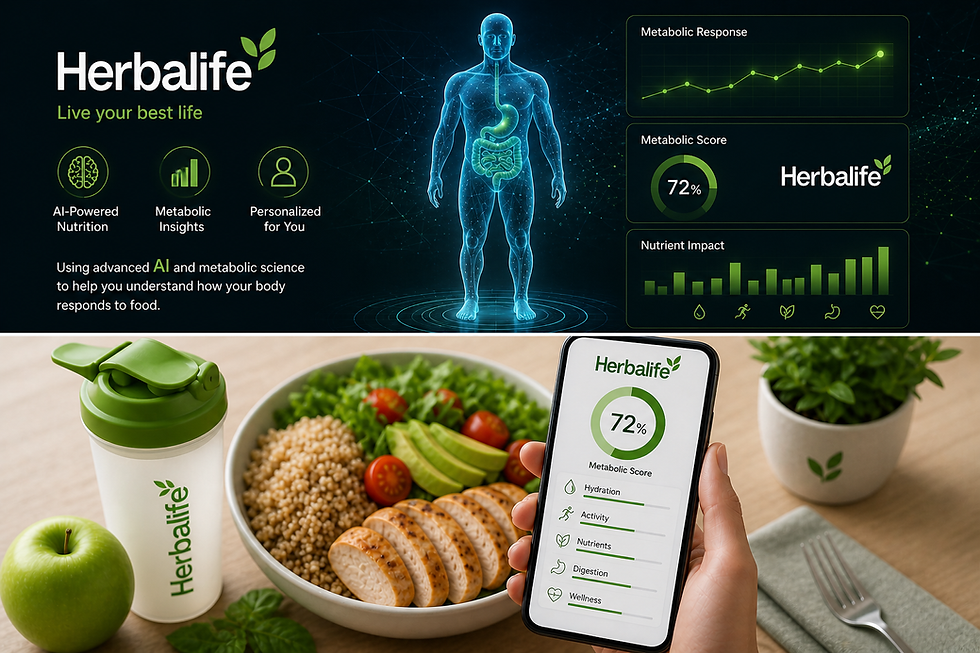
The approach driving the development focuses on personalized nutrition. Instead of general recommendations, the model aims to provide an accurate and tailored understanding for each individual, based on physiological characteristics, eating habits and other data. This will allow for the future offering of personalized menus that will help improve overall health and better manage weight and energy.
Herbalife’s involvement in this development highlights the shift from traditional nutrition companies to the digital and scientific world, combining cutting-edge research with practical solutions for consumers. The collaboration includes researchers, nutritionists and technologists, working together to bridge the gap between data science and the world of health.
The model is still in the development stages, but already shows significant potential to change the way we understand nutrition and its effect on the body, and it may lead to a breakthrough in the field of personalized nutrition and become a key tool for professionals and consumers alike.

Want to know how your body really reacts to what you eat?
The world is moving from general nutrition to personalized nutrition – and now, Herbalife is at the forefront of innovation with the development of an artificial intelligence (AI)-based metabolic model, which aims to accurately predict how the body responds to different foods.
This is a significant leap forward: instead of guessing what is right for you, it will be possible to understand it based on data.
What is the new metabolic model and how does it work?
The innovative system is based on advanced machine learning algorithms, which analyze biological information, dietary habits, and physiological responses.
By processing large amounts of data, the model is able to:
Predict responses to blood sugar levels
Analyze the effects of different foods on metabolism
Identify personal patterns unique to each person
The result: a deeper and more accurate understanding of the body – at a level that was not available until now.
Why is this important to you?
The main advantage of the technology is the transition from general menus to customized solutions.
Instead of uniform recommendations, it will be possible to:
Build a precise personal menu
Improve weight loss in a smarter way
Optimize energy levels throughout the day
Support a healthy lifestyle over time
This approach changes the rules of the game in the world of health and nutrition.
The combination of science, technology and nutrition
Herbalife's involvement in the project highlights a broad trend in which the company believes and advocates: connecting health sciences and advanced technologies.
The development is carried out in collaboration with experts from various fields:
Data scientists
Nutrition researchers
Technology people
This combination makes it possible to transform complex information into practical solutions for real people.
The future of nutrition is here.
The ability to predict the body's response to food marks the next generation of the health world: precise, data-driven, personalized nutrition.
The meaning is clear: less trial and error – more results.


Comments